
»
»

Country of departure:

TRAME considers “country of departure” to be the North African or Middle Eastern country where the interviewee lived for most of their life before arriving in Italy, in accordance with the archival criteria adopted by the CDEC.

Country of birth:

Year of birth:

Age at arrival in Italy: years old

He leaves the country of origin for reasons

The arrival in Italy did not involve intermediate stops

He arrives in Italy with family members

The map follows the movements of the interviewee, ending the year after their arrival in Italy

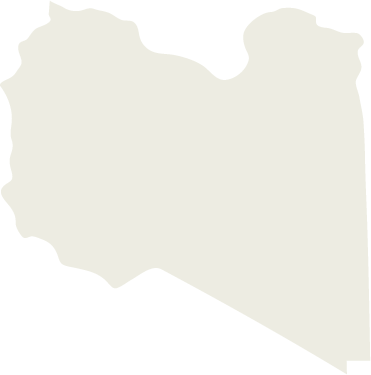
Alfonso Arbib, now the chief rabbi of the Jewish community of Milan, was born in Tripoli in 1958 as the eldest child of Yusef and Ester (Rina) Baranes. His original name is Hlafo, a very common name among Tripolitan Jews that is derived from the Judeo-Arabic version of the Arabic name Halfalla, which means “he whom God has redeemed” (Pedatzur in Hebrew). He grew up in central Tripoli in a family of Italian culture and language that was deeply immersed in Jewish traditions: kashrut, Shabbat, and attending the Bet-El synagogue. Although he only spent his childhood in Libya, Rav Arbib clearly recalls the difference between the Jews of the old city, the hara, known for their stricter religious observance, and those in the modern part, who took a more flexible approach to maintaining traditions.

Installation ceremony of Rabbi Arbib at the Via Guastalla Synagogue, Milan, 2005. Archives CDEC Foundation

Until June 1967, Rav Arbib and his three sisters attended the Italian school. With his family, he experienced a peaceful and affluent childhood, thanks to the economic boom generated by the discovery of oil in Libya in the 1960s. This was a different Libya from the one experienced by previous generations, who had faced greater hardships. He learned from his mother’s stories about the life of Libyan Jews before his birth when the community was rebuilt by Jewish soldiers from Palestine, who promoted the teaching of Hebrew and youth associations. However, it was only in adulthood that he found out about the internment measures and deportations that the Jewish community had suffered during World War II.

On June 5, 1967, while Rav Arbib was at school, the Six-Day War broke out. Violent anti-Jewish and anti-Israeli demonstrations swept through the streets of Tripoli. His father picked him up from school, but it was too dangerous to cross the capital’s streets, so they took refuge with friends living nearby. Once they had finally managed to return home, the Arbib family was forced to stay confined for twenty days, surviving thanks to food brought by Yusef’s friends. The local authorities unsuccessfully attempted to transfer them to a gathering camp on the outskirts of Tripoli, where many other Jews had agreed to move in search of refuge. Shortly after, on June 25, the Arbib family left Libya for Rome, arriving as stateless persons — a situation common to many other Libyan Jews.

We didn’t have passports, Jews didn’t have passports

Interviewer: 

What passport did you use to leave?

Alfonso Arbib: 

We didn’t have passports, Jews didn’t have passports; at least, the vast majority of Jews didn’t have passports. They had a travel document, [for which] a visa was required each time. A few Jews had a Libyan passport—for example, my uncle had a Libyan passport—and others had Italian, British, [or] French passports, and then there were Jews who had other passports. But normally, there was no passport; normally Jews were not entitled to a passport, they had a travel document.

Interviewer: 

So what was your nationality?

Alfonso Arbib: 

Well, when we arrived here, we were stateless.

Interviewer: 

But when you were there?

Alfonso Arbib: 

None.

Interviewer: 

Without nationality?

Alfonso Arbib: 

Without nationality, we didn’t have a nationality. That’s why I talk about dhimmi: It’s not like you leave [Libya], you have a nice house…but you still don’t have the right to a passport. Another thing: in Tripoli, families couldn’t all leave together; someone had to stay behind as a hostage.

Interviewer: 

This was in ’67?

Alfonso Arbib: 

Even before, in ’67, without a doubt. But before ’67, if we had to go to Italy, the whole family couldn’t go. Someone had to stay in Libya, and they could also tell you “no,” they could tell you that you couldn’t leave.

The arrival in Italy marked a moment of liberation for Alfonso Arbib. The family’s knowledge of Italian and their comfortable situation eased their adaptation, although he noticed the difficulties that many other families faced in rebuilding their lives. In those uncertain times, the Piazza Bologna in Rome became the meeting point for Tripolitan Jews searching for news, work, and a new sense of community.

In Italy, Rav Arbib continued his studies at the Italian school while attending the Italian Rabbinical College in the afternoons under the guidance of Rome’s chief rabbi, Elio Toaff. Here, he first obtained the title of maskil and later received semikhah, becoming a senior rabbi. In 1986, he began to teach Jewish subjects at the high schools of the Jewish school in Milan, and in 2005, he succeeded Rav Giuseppe Laras as the chief rabbi of Milan.

Related stories

How to read the data portraits
The data represented in the portraits include gender, age at arrival in Italy, decade of arrival in Italy, country of origin, reasons for departure, whether the journey included stops or was direct, and whether the person traveled alone or with family.

Gender and age at arrival in Italy

Female, age 0-9

Female, age 10-19

Female, age 20-29

Female, age 30-39

Female, age 40-49

Female, age 50-59

Female, age 60-69

Female, age 70-79

Female, age 80-89

Female, age 90-99

Male, ages 0-9

Male, ages 10-19

Male, age 20-29

Male, age 30-39

Male, age 40-49

Male, age 50-59

Male, age 60-69

Male, age 70-79

Male, age 80-89

Male, age 90-99

Decade of arrival in Italy

1940

1950

1960

1970

1980

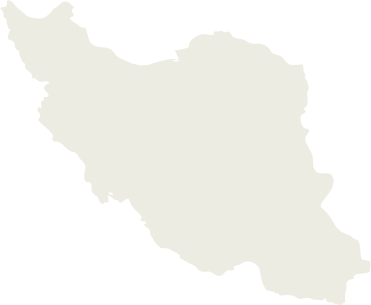
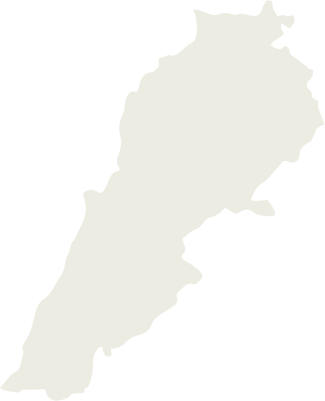
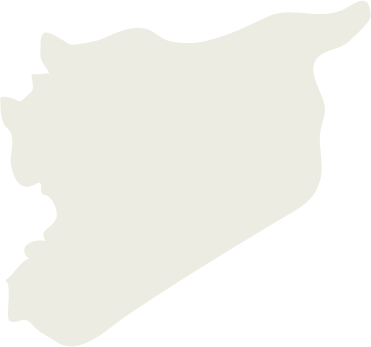
Country of origin

Egypt

Iran

Lebanon

Libya

Syria

Tunisia

Reasons for departure from the country of origin

Politics

Economic

Study

Personal

Direct trip to Italy or with one ore more intermediate stops

Direct trip

With one ore more intermediate stops

She/He arrived in Italy alone or with family members

She/He arrived in Italy alone

She/He arrived in Italy with family members

What is a data portrait
A data portrait is a form of artwork that visually represents a specific set of data about an individual, rather than depicting their physical appearance like traditional portraits. Data portraits are subjective renderings that mediate between the artist’s vision, the subject’s data, and the audience’s interest (Donath et al., 2010).
Following this concept, the data portraits designed by Sara Radice specifically for the project TRAME allow for an understanding of a person through various data points, enhancing the viewer’s understanding of the subject beyond their physical appearance.

References and credits
Judith Donath, Alex Dragulescu, Aaron Zinman, Fernanda Viégas, Rebecca Xiong; Data Portraits. Leonardo 2010; 43 (4): 375-383. doi: https://doi.org/10.1162/LEON_a_00011.

The data portraits designed for this project draw inspiration from the data portraits projects designed by Giorgia Lupi, such as the physical installation “…Ma poi, che cos’è un nome?” for the CDEC Foundation at the Milan Triennale Museum in 2018 and the TED Data Portraits in 2017.

How to read the data portraits
The data represented in the portraits include gender, age at arrival in Italy, decade of arrival in Italy, country of origin, reasons for departure, whether the journey included stops or was direct, and whether the person traveled alone or with family.

Gender and age at arrival in Italy

Female, age 0-9

Female, age 10-19

Female, age 20-29

Female, age 30-39

Female, age 40-49

Female, age 50-59

Female, age 60-69

Female, age 70-79

Female, age 80-89

Female, age 90-99

Male, ages 0-9

Male, ages 10-19

Male, age 20-29

Male, age 30-39

Male, age 40-49

Male, age 50-59

Male, age 60-69

Male, age 70-79

Male, age 80-89

Male, age 90-99

Decade of arrival in Italy

1940

1950

1960

1970

1980

Country of origin

Egypt

Iran

Lebanon

Libya

Syria

Tunisia

Reasons for departure from the country of origin

Politics

Economic

Study

Personal

Direct trip to Italy or with one ore more intermediate stops

Direct trip

With one ore more intermediate stops

She/He arrived in Italy alone or with family members

She/He arrived in Italy alone

She/He arrived in Italy with family members

What is a data portrait
A data portrait is a form of artwork that visually represents a specific set of data about an individual, rather than depicting their physical appearance like traditional portraits. Data portraits are subjective renderings that mediate between the artist’s vision, the subject’s data, and the audience’s interest (Donath et al., 2010).
Following this concept, the data portraits designed by Sara Radice specifically for the project TRAME allow for an understanding of a person through various data points, enhancing the viewer’s understanding of the subject beyond their physical appearance.

References and credits
Judith Donath, Alex Dragulescu, Aaron Zinman, Fernanda Viégas, Rebecca Xiong; Data Portraits. Leonardo 2010; 43 (4): 375-383. doi: https://doi.org/10.1162/LEON_a_00011.

The data portraits designed for this project draw inspiration from the data portraits projects designed by Giorgia Lupi, such as the physical installation “…Ma poi, che cos’è un nome?” for the CDEC Foundation at the Milan Triennale Museum in 2018 and the TED Data Portraits in 2017.